Which Languages Can You Translate with LangsAny?
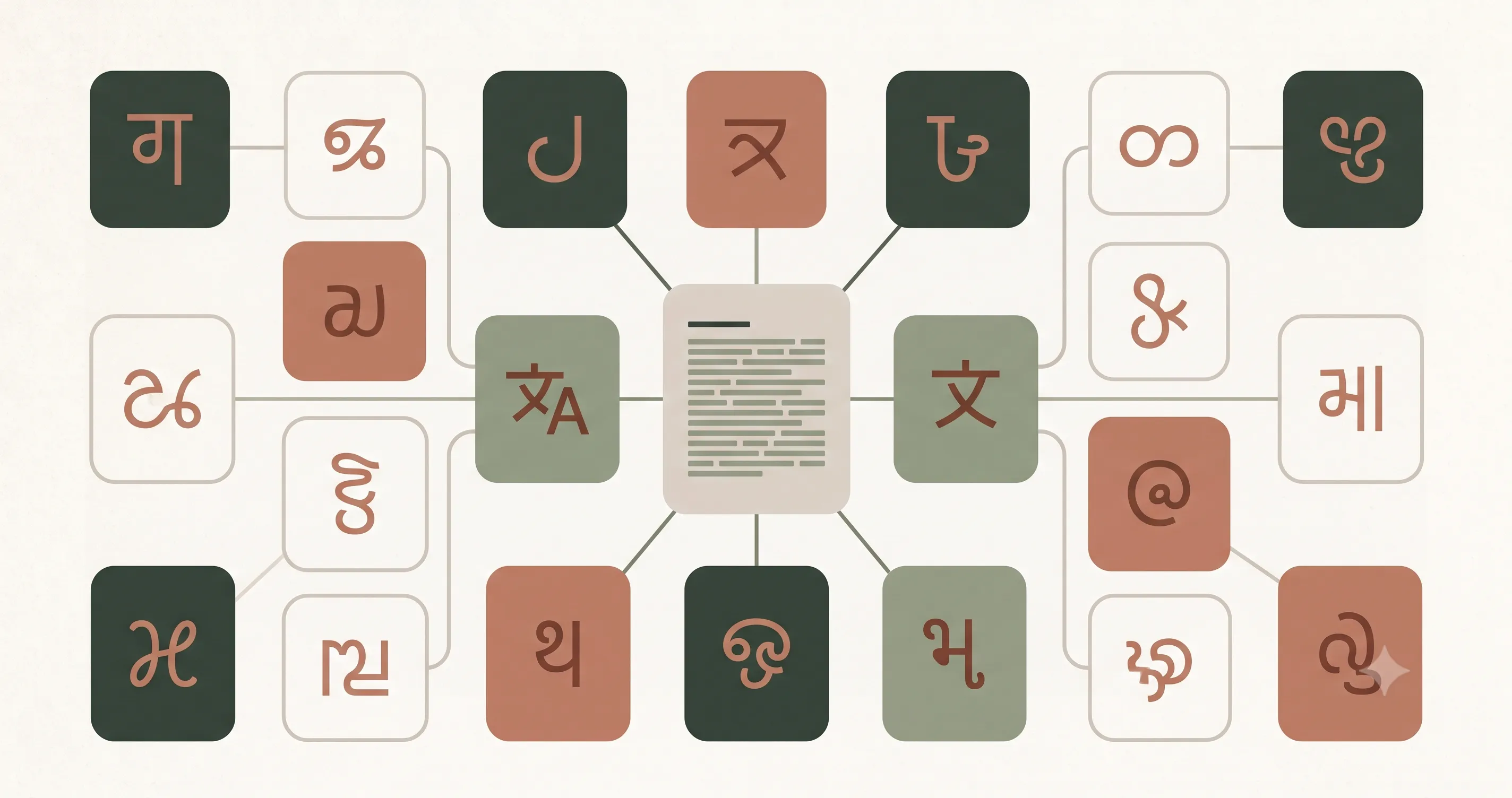
The name “LangsAny” states the ambition: translate languages, any of them. Honesty requires the current number: the supported languages today are 26, fully on-device, with more language pairs arriving as we verify them. This post lists exactly what works now, explains how language pairs are routed under the hood, and lays out the roadmap toward the “any” in our name.
Supported languages today
| Support level | Languages | Directions |
|---|---|---|
| Fully bidirectional | Spanish, French, German, Chinese (Simplified), Russian, Italian, Dutch, Hindi, Arabic, Vietnamese, Indonesian, Ukrainian, Swedish, Danish, Finnish, Czech, Hungarian, Afrikaans | English ↔ each, both ways |
| Into English | Japanese, Korean, Turkish, Polish, Estonian, Thai | X → English (and onward via pivot) |
| From English | Romanian | English → X only |
In Chrome, the browser's built-in on-device translator fills in many missing directions — for example English → Japanese — with no download at all, quietly extending the supported languages beyond this table.
How non-English language pairs work: the English pivot
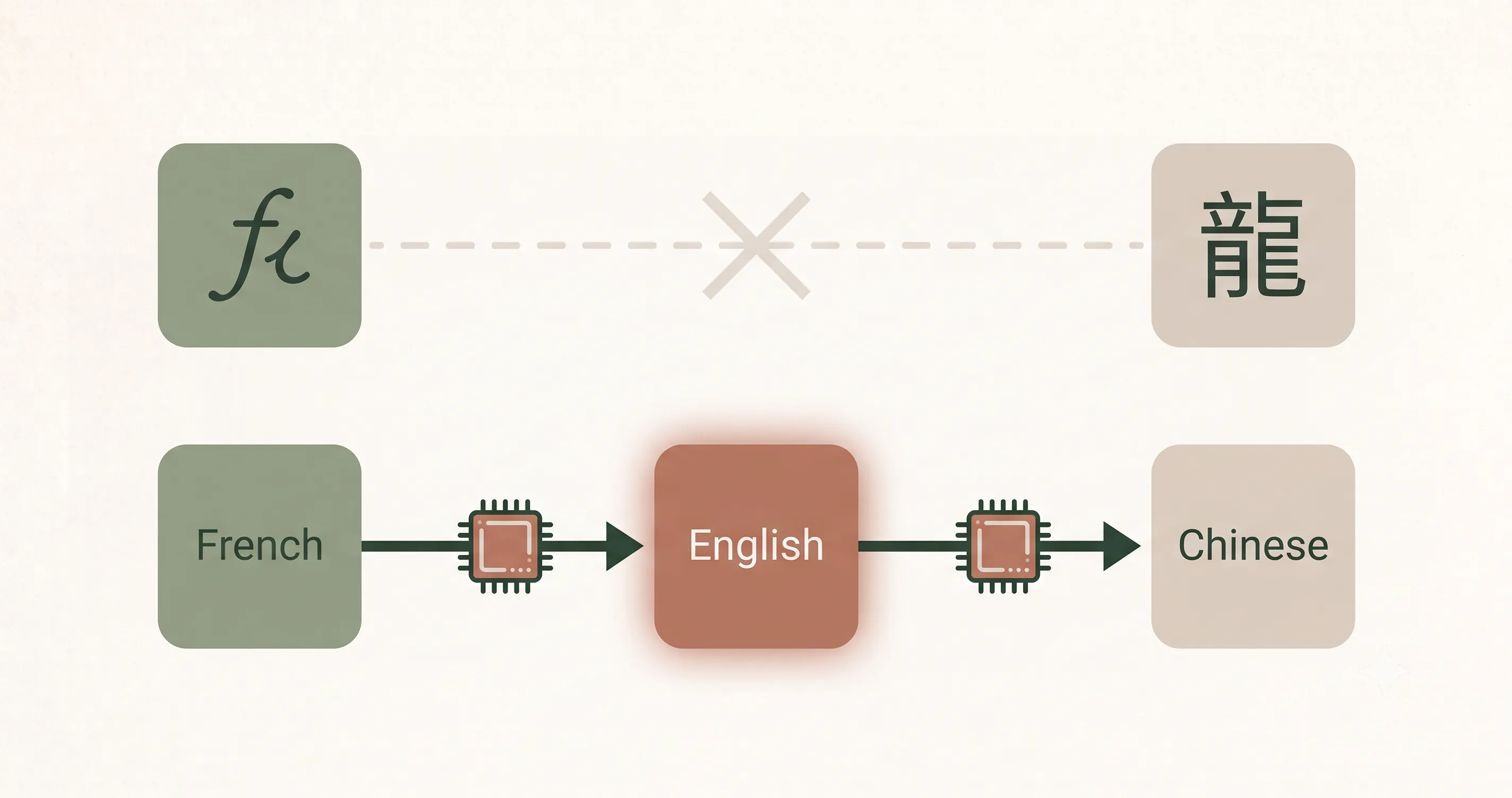
Our on-device models are trained per language pair, and the best compact models overwhelmingly pair with English. So when you translate, say, French → Chinese, LangsAny automatically chains two language pairs: French → English, then English → Chinese — both running locally, both cached for offline use. Pivoting costs a little quality compared to a direct model, but it multiplies coverage: 26 supported languages give hundreds of usable pair combinations.
Can LangsAny really support every language?
Genuinely close to it — and here is the concrete plan:
1. More per-pair models
We continuously verify additional open-source Opus-MT models and add every language pair that meets our quality bar. The supported languages list grew from 17 to 26 in a single verification round — per-pair models stay first choice because they are smaller and sharper.
2. A universal fallback model
The open-source NLLB-200 model (“No Language Left Behind”, by Meta AI, available as a distilled model on Hugging Face) covers 200 languages in a single ~330 MB on-device model. We are integrating it as the fallback engine for every language our per-pair models don't cover — from Swahili to Tamil to Icelandic. Between per-pair models for popular language pairs and NLLB-200 for the long tail, “any language” stops being a slogan and becomes an engineering schedule.
3. Browser built-in translation
Chrome's on-device Built-in Translator keeps adding language packs, and LangsAny uses them automatically whenever they cover your pair — expanding the supported languages with zero download cost.
Choosing language pairs wisely (especially offline)
A practical tip while coverage grows: if you plan to translate offline, prepare your language pairs while connected by translating one sentence in each direction you'll need — each direction is its own model. For non-English pairs, the English pivot means two models get downloaded; both are then cached and translate free offline afterwards.
What we won't do
We won't list supported languages before they actually work on-device, and we won't quietly fall back to a cloud API to pad the number — that would break the one promise this site is built on. If a language you need is missing, tell us at [email protected]; verified requests move to the front of the queue as we translate languages further down the long tail.
References & further reading
- 01No Language Left Behind (NLLB) — Meta AI researchai.meta.com/research/no-language-left-behind/
- 02NLLB-200 distilled 600M — model card on Hugging Facehuggingface.co/facebook/nllb-200-distilled-600M
- 03Opus-MT: open translation models by Helsinki-NLPgithub.com/Helsinki-NLP/Opus-MT
- 04Chrome Translator API (built-in AI)developer.chrome.com/docs/ai/translator-api
Explore supported languages
Translate between dozens of language pairs with private, on-device neural models.
Open the translator